Riding Basics and Safety
Motorcycling is one of the most rewarding forms of transportation and recreation available. Few things match the feeling of leaning into a curve, hearing the engine respond to your throttle, and watching the road unfold ahead of you. At the same time, motorcycles demand a higher level of attention, coordination, and respect than most other vehicles. Unlike a car, where many mistakes are absorbed by seatbelts, airbags, and thousands of pounds of metal, motorcycles rely heavily on the rider's skill and awareness.
Because of this, learning the fundamentals of riding properly is extremely important. Good habits developed early in your riding career will stay with you for years and dramatically improve both safety and enjoyment. The goal of this guide is not simply to show you how to operate a motorcycle, but to help you understand why riders do things the way they do.
When you understand the reasons behind riding techniques and safety practices, motorcycling becomes far less mysterious and far more manageable.
Basic Controls
Before a motorcycle ever begins moving, a rider must understand the machine's controls. Unlike cars, where nearly all the controls are located on a steering wheel and pedals, motorcycles distribute their controls across both hands and both feet. This means that riding a motorcycle requires a coordinated combination of inputs from all four limbs at once.
At first this can feel overwhelming, but with practice it becomes second nature. Understanding how each control works—and why it is used the way it is—makes the learning process much smoother.
Throttle
The throttle is located on the right handlebar grip and controls how much power the engine produces. Twisting the throttle toward you increases engine speed, which causes the motorcycle to accelerate.
The reason throttle control is so important is because motorcycles respond much more directly to throttle inputs than cars do. A small twist of the wrist can create a noticeable change in speed, especially on more powerful motorcycles. This responsiveness is part of what makes motorcycles exciting to ride, but it also means that smoothness matters.
Abrupt throttle inputs can upset the balance of the motorcycle or cause unintended acceleration. For this reason, experienced riders emphasize smooth and controlled throttle use. When riders talk about “being smooth,” they are referring to the idea that every input—throttle, braking, steering—should be gradual and deliberate rather than sudden.
Smooth throttle control keeps the motorcycle stable and predictable, which is especially important for beginners.
Front Brake
The front brake lever, located on the right handlebar, is typically the most powerful braking control on the motorcycle. When you apply the front brake, weight shifts forward onto the front wheel. This increased weight improves traction at the front tire, allowing it to generate more stopping force.
Because of this weight transfer, the front brake can provide the majority of the motorcycle's stopping power during normal braking situations. However, this power must be used carefully. Applying the front brake too abruptly can overwhelm the front tire's traction and cause instability.
Experienced riders therefore use progressive braking. This means applying the brake smoothly and increasing pressure gradually rather than squeezing it suddenly. This technique allows the tire to maintain traction while slowing the motorcycle effectively.
Understanding how the front brake works helps riders appreciate why proper braking technique is so important.
Rear Brake
The rear brake pedal, operated by the rider's right foot, provides additional braking force and stability. While it does not usually contribute as much stopping power as the front brake, it plays an important role in controlling the motorcycle at lower speeds.
The rear brake helps stabilize the motorcycle during slow maneuvers such as parking lot riding, tight turns, and stop-and-go traffic. Because the rear wheel carries less weight during braking, it is easier for it to lock up if too much pressure is applied. However, when used properly alongside the front brake, it contributes to smooth, controlled stops.
Learning to use both brakes together gives riders better control and more predictable stopping performance.
Clutch
The clutch lever, located on the left handlebar, temporarily disconnects the engine from the rear wheel. This allows the rider to change gears and control how engine power is delivered to the motorcycle.
The clutch plays a crucial role in managing the transition between a stationary motorcycle and a moving one. When releasing the clutch slowly, there is a point where the engine begins transferring power to the rear wheel. This point is known as the friction zone.
The friction zone is extremely important because it allows riders to control the motorcycle at low speeds. Instead of fully engaging the engine all at once, the rider can gradually introduce power. This smooth transfer of power makes starting, maneuvering, and balancing the motorcycle much easier.
Many beginner riders struggle with the clutch initially because releasing it too quickly can cause the engine to stall. However, once riders learn to feel the friction zone, they gain far greater control over the motorcycle.
Gear Shifter
Motorcycles use a manual transmission that is controlled by the rider's left foot. The gear shifter allows the rider to select different gears depending on speed and engine load.
Most motorcycles follow a standard shifting pattern:
1 down - neutral - 2 up - 3 up - 4 up - and so on
Lower gears provide stronger acceleration but lower top speeds, while higher gears allow the motorcycle to travel faster with lower engine RPM. Shifting gears keeps the engine operating within an efficient range.
Learning when and how to shift is part of developing a feel for the motorcycle. With experience, riders begin to recognize the sound and vibration of the engine and shift naturally without needing to think about it.
Kill Switch
The kill switch is a safety feature that immediately shuts off the engine. It is typically located near the right handlebar controls.
While it may seem like a minor control, it plays an important role in emergencies. If the motorcycle tips over or something unexpected occurs, shutting off the engine quickly can prevent further problems.
Knowing where the kill switch is—and being able to reach it instinctively—is part of safe riding.
Mounting and Starting the Motorcycle
Mounting and starting a motorcycle may seem like a simple step, but establishing a consistent routine helps build confidence and prevents small mistakes that can lead to awkward situations.
Motorcycles are lighter and more sensitive to balance than cars. Because of this, even basic actions like mounting the bike or starting the engine benefit from a calm and methodical approach.
Mounting the Motorcycle
Riders traditionally mount motorcycles from the left side. While there is nothing mechanically preventing someone from mounting from the other side, the left-side approach has become standard because of the placement of the kickstand and the way motorcycles are typically parked.
When mounting the bike, hold the handlebars firmly, keep the motorcycle balanced, and swing your right leg over the seat. Once seated, keep the motorcycle upright with one or both feet on the ground.
The reason balance matters here is simple: motorcycles are stable when moving, but when stationary they rely entirely on the rider for support. Maintaining control of the bike before starting it prevents accidental tip-overs.
Preparing to Start
Before starting the engine, a few quick checks should be performed.
First, confirm that the motorcycle is in neutral. Starting the bike in gear without the clutch engaged can cause the motorcycle to lurch unexpectedly.

Second, verify that the kill switch is in the run position. This is a surprisingly common beginner mistake and often leads to a moment of confusion when the bike refuses to start.
Third, ensure that the rider is seated comfortably and ready to control the motorcycle.
These small steps only take a few seconds, but they help create a safe and consistent starting routine.
Starting the Engine
To start the motorcycle, turn the ignition on and press the starter button. Most modern motorcycles start quickly and require little effort.
Once the engine is running, allow it to idle briefly. This gives the engine a moment to stabilize and allows the rider to listen for anything unusual.
Taking a moment before moving off also helps the rider mentally prepare for the ride ahead.
Preparing to Move
When ready to begin riding:
- Pull in the clutch lever.
- Shift into first gear.
- Slowly release the clutch to the friction zone.
- Apply a small amount of throttle.
- Continue releasing the clutch smoothly.
This process allows the motorcycle to begin moving gradually rather than abruptly. Smooth coordination between the clutch and throttle is one of the most important early riding skills.
It may take several attempts for beginners to feel comfortable with this process, and stalling the engine occasionally is completely normal. Every rider has done it. The key is practicing until the movements become natural.
Riding Position
One of the most overlooked aspects of riding a motorcycle is body position. New riders often focus heavily on the controls—throttle, clutch, brakes—but how you sit on the motorcycle has a major impact on balance, comfort, and control.
A good riding position allows the motorcycle to move naturally beneath you while keeping you relaxed and ready to respond to changing conditions. Motorcycles are designed to lean, shift, and react to the road, and your body position plays an important role in how smoothly those movements happen.
Relaxed Posture
When sitting on a motorcycle, your posture should be upright and relaxed. Your back should be straight but not rigid, and your shoulders should remain loose rather than tense. Tension in your upper body often transfers directly to the handlebars, which can make steering feel jerky and unpredictable.
Many beginners instinctively grip the handlebars tightly, especially when they feel nervous. However, the handlebars are meant primarily for steering input rather than supporting your body weight. If you find yourself leaning heavily on your hands, it is often a sign that your core and legs are not helping stabilize your position.
A relaxed posture helps the motorcycle feel more stable and easier to control.
Hands and Arms
Your hands should rest lightly on the handlebars with your elbows slightly bent. Bent arms act as natural suspension, allowing your body to absorb small bumps and movements without transferring them directly into steering inputs.
Locked elbows can make the motorcycle feel unstable because every movement of your upper body is transmitted directly to the handlebars. Keeping your arms relaxed allows the bike to move freely while still maintaining control.
Legs and Lower Body
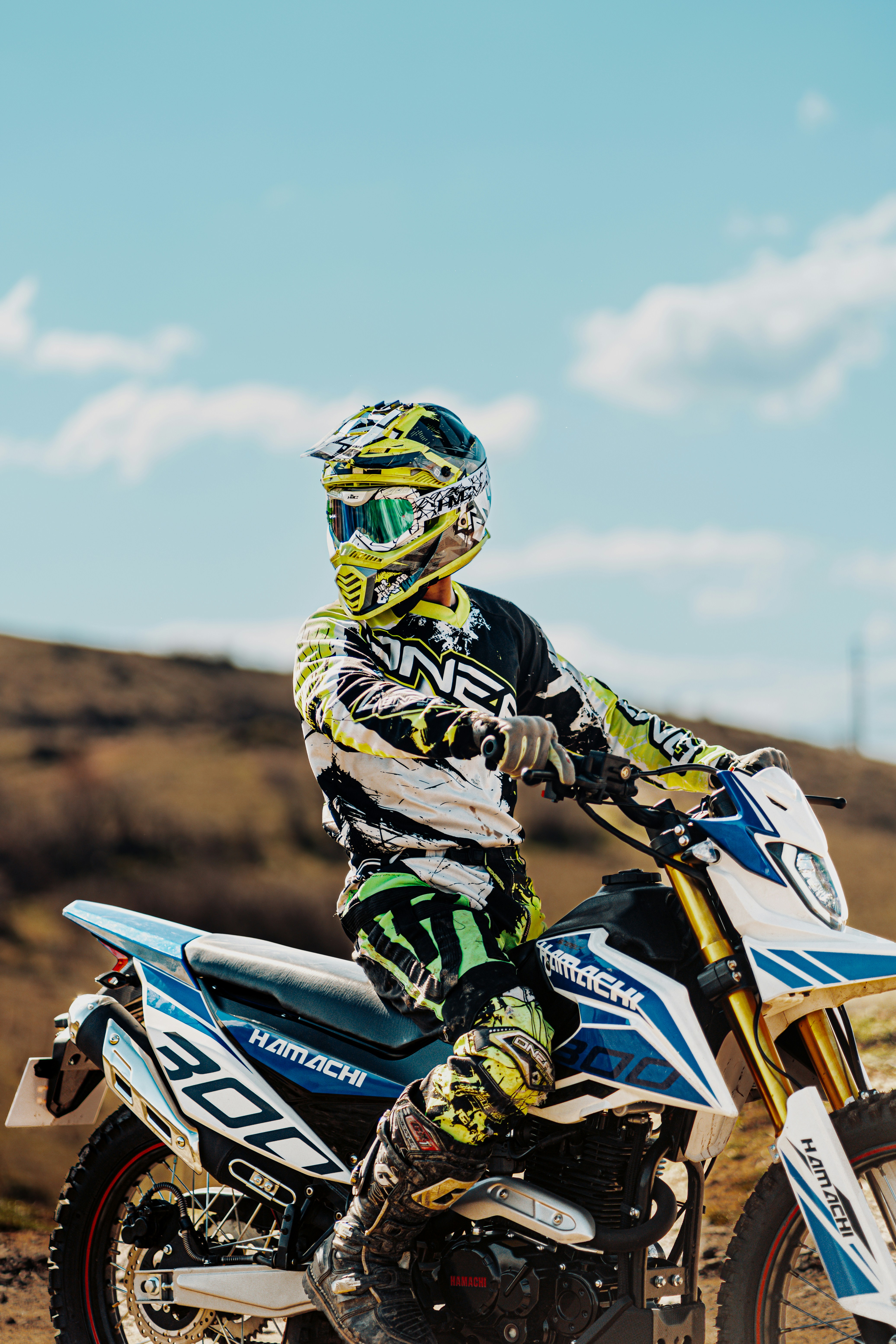
Your legs play an important role in stabilizing your body on the motorcycle. Lightly gripping the tank with your knees helps anchor your body to the bike and reduces the need to support yourself with your arms.
This becomes especially important during acceleration and braking. When the motorcycle accelerates, your body naturally shifts backward. When braking, your body moves forward. Using your legs to stabilize yourself prevents unnecessary strain on your arms and allows you to maintain better control of the handlebars.
Head and Vision
Where you look has a powerful influence on how you ride. Riders should always keep their head up and eyes scanning the road ahead. Looking too close to the front wheel reduces reaction time and makes it harder to anticipate hazards.
Motorcycles tend to follow the rider's vision. This phenomenon is often called target fixation, where riders unintentionally steer toward the object they are looking at. By training yourself to look where you want to go, you help guide the motorcycle smoothly through turns and around obstacles.
A balanced riding position combined with good visual habits creates a strong foundation for safe riding.
Starting, Stopping, and Shifting

Smooth Starts
Starting from a stop requires coordination between the clutch and the throttle. The clutch allows the rider to gradually connect the engine's power to the rear wheel, while the throttle determines how much power the engine produces.
The goal is to release the clutch slowly through the friction zone while applying just enough throttle to keep the engine running smoothly. If the clutch is released too quickly, the engine may stall. If too much throttle is applied, the motorcycle may accelerate abruptly.
Smooth starts are important because they help maintain balance and prevent unexpected movements. Practicing this coordination in a safe environment, such as an empty parking lot, allows new riders to build confidence before riding in traffic.
Controlled Stops
Stopping a motorcycle requires coordinated use of both brakes. When braking, weight shifts forward toward the front wheel. This increases traction at the front tire, which is why the front brake provides most of the stopping power.
However, applying the front brake too abruptly can cause instability. Instead, riders should apply braking pressure gradually and increase it smoothly as the motorcycle slows. The rear brake adds additional stability and helps maintain balance, especially at low speeds.
Proper braking technique is essential because emergency stops occasionally occur in real-world riding. Practicing smooth braking builds the muscle memory needed to react quickly and safely.
Shifting Gears
Motorcycles use multiple gears to keep the engine operating efficiently at different speeds. Lower gears provide stronger acceleration, while higher gears allow the motorcycle to travel faster with less engine strain.
Shifting involves briefly disengaging the engine from the rear wheel using the clutch, selecting the next gear, and then smoothly re-engaging the clutch while applying throttle.
Learning to shift smoothly helps maintain stability and prevents jerky transitions between gears. With experience, riders begin to recognize the sound and feel of the engine and shift naturally without needing to watch the gauges.
Smooth shifting contributes to a more controlled and comfortable ride.
Basic Turns and Cornering
Turning is one of the most important and rewarding skills in motorcycling. It is also one of the areas where beginners often feel the most nervous. At first, the idea of leaning a motorcycle into a turn can feel unnatural. Your brain may instinctively want to keep the bike upright, especially when entering a curve at speed. However, motorcycles are specifically designed to lean, and understanding how and why they do so makes cornering feel much more intuitive.
When a motorcycle turns, it does not steer in the same way a car does. Instead of simply pointing the front wheel in a new direction and following it, motorcycles rely on lean angle to balance the forces acting on the bike during a turn. When traveling in a straight line, gravity pulls the bike downward while the tires maintain traction with the road. When entering a turn, the motorcycle must lean to counteract the outward force created by the change in direction. This lean allows the tires to maintain traction and keeps the bike stable throughout the turn.

Entering a Turn
One of the most important principles of cornering is the idea of slow in, smooth through, and controlled out. This means that riders should adjust their speed before entering a turn rather than trying to slow down suddenly in the middle of it.
Entering a turn too quickly is one of the most common mistakes new riders make. When riders approach a curve faster than they are comfortable with, they often panic and apply the brakes abruptly while already leaning. This can reduce traction and make the motorcycle unstable.
Instead, experienced riders slow down before the turn begins. This allows the motorcycle to enter the turn at a manageable speed, making it easier to maintain smooth control throughout the corner.
Looking Through the Turn
Where you look plays a major role in how well you turn. Riders should always look through the turn toward the exit of the curve, not directly at the pavement in front of the motorcycle.
This works because your body naturally follows your line of sight. When you turn your head and focus on where you want to go, your arms and body subtly adjust to guide the motorcycle along that path. Conversely, if you stare at a hazard such as a curb, pothole, or guardrail, you may unintentionally steer toward it. This phenomenon is known as target fixation, and it is responsible for many beginner riding mistakes.
By training yourself to look ahead and focus on the path you want to follow, you help the motorcycle track smoothly through the turn.

Lean and Balance
Motorcycles are designed to lean naturally when turning. Riders do not need to force the bike down into the turn; instead, the lean develops as a natural result of steering input and speed.
As the motorcycle leans, the tires maintain traction with the road surface. Modern motorcycle tires are designed with curved profiles that provide grip even when the bike is leaned significantly. This design allows motorcycles to corner safely and predictably when ridden properly.
Beginners often feel nervous about leaning, but with practice they discover that the motorcycle is far more capable than it initially seems.
Countersteering
At moderate and higher speeds, motorcycles turn using a technique known as countersteering. While the term may sound complicated, it simply refers to the way riders initiate a lean.
To turn right, the rider gently presses the right handlebar forward. To turn left, the rider presses the left handlebar forward. This brief steering input causes the motorcycle to lean in the desired direction.
This happens because of the motorcycle's steering geometry and the physics of rotating wheels. When the handlebar is momentarily turned in the opposite direction, the bike naturally leans toward the intended direction of travel.
Many riders perform countersteering without consciously thinking about it. However, understanding the concept helps riders gain more precise control, especially when navigating curves at higher speeds.
Smooth Throttle Control in Corners
Maintaining smooth throttle control during a turn helps keep the motorcycle stable. Abrupt throttle changes can upset the balance of the motorcycle, especially while leaned over.
A steady, slightly increasing throttle through the exit of a turn helps stabilize the suspension and maintain traction. This smooth control is what experienced riders mean when they emphasize the importance of being “smooth” with every input.
Cornering becomes more comfortable and enjoyable as riders develop these habits.